
Our Accreditations
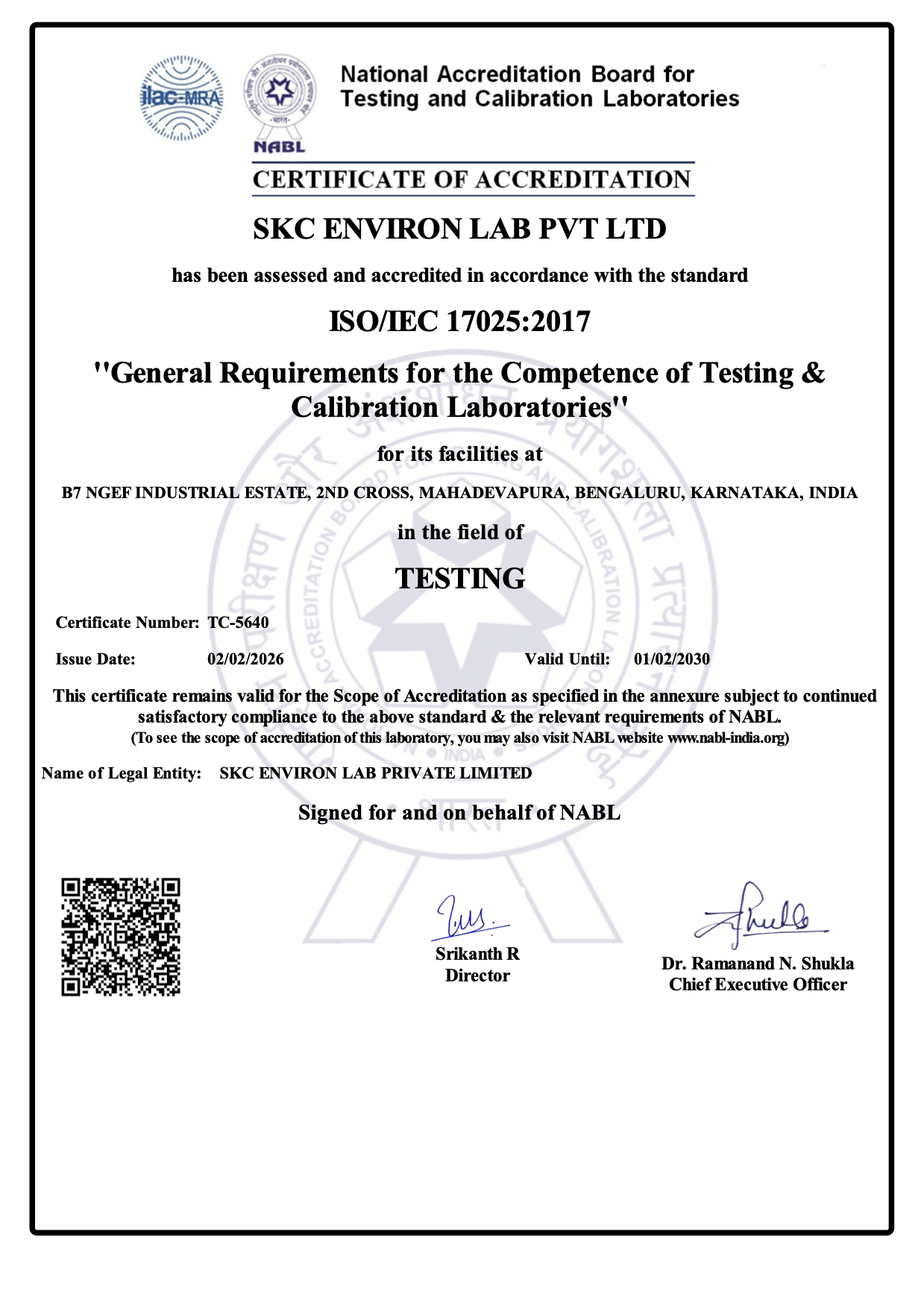
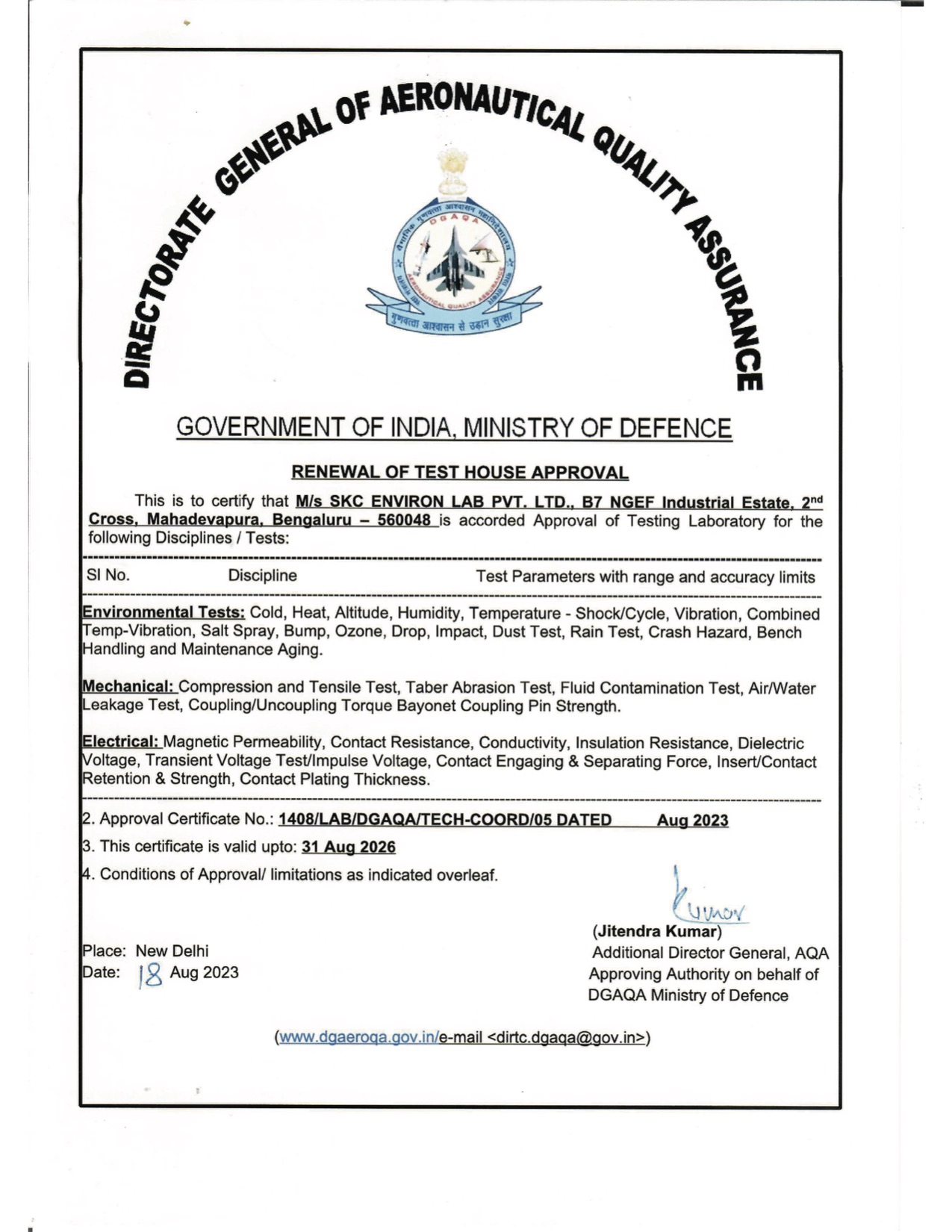
Test Standard Details
Military & Defence (MIL / JSS)
Automotive & EV (AIS / UN / USCAR / LV / JIS)
Environmental & Industrial (IEC / ISO / IS)
Aerospace, Telecom & Railway (RTCA / EN / ETSI / EIA)
Packaging & Transit (ASTM / ISTA)
Other Standards
Other OEM Standards
Automotive Electronics Council AEC Q100
AEC Q100 is a globally recognized qualification standard developed for integrated circuits (ICs) used in automotive electronic systems. The standard establishes stress test qualification requirements to ensure semiconductor devices can withstand harsh operating environments encountered in vehicles, including extreme temperatures, humidity, mechanical vibration, thermal cycling, and electrical stress conditions. It is widely adopted by automotive OEMs and semiconductor manufacturers to verify the long-term reliability and durability of electronic components used in critical automotive applications such as engine control units, ADAS systems, battery management systems, infotainment modules, and safety electronics.
The standard defines a comprehensive qualification framework covering accelerated environmental, mechanical, and electrical reliability tests for packaged integrated circuits. Common evaluations include High Temperature Operating Life (HTOL), Temperature Cycling (TC), Highly Accelerated Stress Test (HAST), Electrostatic Discharge (ESD), Latch-Up testing, and moisture resistance assessments. AEC Q100 certification helps ensure consistent component performance throughout the vehicle lifecycle while reducing field failures and improving overall product reliability in demanding automotive environments.
Automotive Electronics Council AEC Q200
AEC Q200 is the automotive industry qualification standard for passive electronic components such as resistors, capacitors, inductors, transformers, and circuit protection devices. The standard specifies stress qualification requirements to validate component reliability under severe automotive operating conditions including vibration, thermal shock, humidity exposure, mechanical stress, and electrical loading. It is extensively used across automotive electronics supply chains to ensure passive components maintain stable performance throughout vehicle service life.
The qualification process includes environmental, mechanical, and endurance-based evaluations designed to simulate real-world automotive conditions. Typical tests include temperature cycling, operational life testing, vibration endurance, solderability, resistance to moisture, and terminal strength verification. AEC Q200 compliance demonstrates that passive components meet stringent automotive reliability expectations for applications such as powertrain electronics, EV systems, safety modules, and control units.
AIS 156
AIS 156 is an Indian automotive safety standard developed specifically for lithium-ion battery packs and battery management systems used in electric vehicles. The standard defines safety, performance, thermal propagation, and abuse testing requirements to improve the reliability and safety of EV battery systems under normal operating and fault conditions. It has become one of the most important regulatory standards for electric mobility products in India.
The standard includes extensive testing related to vibration, mechanical shock, thermal cycling, external short circuit, fire resistance, overcharge protection, water ingress, and thermal runaway propagation. AIS 156 also emphasizes battery management system functionality and safety monitoring to minimize risks associated with battery failures. Compliance with AIS 156 is mandatory for EV manufacturers seeking regulatory approval in the Indian automotive market.
International Electrotechnical Commission IEC 60068
IEC 60068 is an internationally accepted environmental testing standard series used to evaluate the durability and reliability of electrical and electronic equipment under various environmental conditions. The standard provides a structured framework for testing products against climatic, mechanical, and combined environmental stresses encountered during transportation, storage, and operational service life.
The IEC 60068 series includes a wide range of test methods covering vibration, mechanical shock, temperature cycling, damp heat, salt mist, dust, corrosion, and combined environmental conditions. It is extensively applied in automotive, aerospace, railway, industrial, telecom, and consumer electronics industries to validate product robustness and long-term operational stability.
International Electrotechnical Commission IEC 61373
IEC 61373 specifies shock and vibration testing requirements for equipment installed on railway rolling stock. The standard is intended to ensure that electrical and electronic equipment can withstand the dynamic mechanical stresses generated during railway operation, including vibration caused by track irregularities, acceleration, braking, and coupling impacts.
The standard classifies equipment based on mounting locations such as body-mounted, bogie-mounted, or axle-mounted installations, each with different severity levels. Testing typically includes random vibration, functional vibration endurance, and shock evaluations designed to simulate long-term railway service conditions. IEC 61373 is widely used for railway electronics, control systems, communication equipment, and onboard safety devices.
International Organization for Standardization ISO 16750
ISO 16750 defines environmental conditions and testing procedures for automotive electrical and electronic equipment. The standard evaluates component reliability under real-world automotive operating conditions including mechanical vibration, thermal stress, electrical loading, climatic exposure, and chemical resistance.
The standard contains multiple sections covering electrical loads, mechanical vibration, thermal environments, chemical exposure, and climatic conditions. It is commonly applied to validate ECUs, sensors, connectors, displays, battery systems, and other automotive electronic modules. ISO 16750 helps manufacturers ensure reliable product performance throughout vehicle operating life.
International Safe Transit Association ISTA
ISTA standards are globally recognized transportation simulation procedures used to evaluate the performance and durability of packaged products during shipping and distribution. The standards help manufacturers assess how packaging systems protect products against handling, vibration, compression, impact, and environmental stresses encountered throughout supply chains.
ISTA procedures include drop testing, random vibration, compression, atmospheric conditioning, and impact simulations representing real transportation environments. Different ISTA series are designed for various package types, transportation modes, and distribution systems. These standards are widely used in electronics, consumer goods, medical devices, and e-commerce industries.
MIL-STD-810
MIL-STD-810 is a military environmental engineering standard developed to evaluate equipment durability and operational reliability under severe environmental conditions. The standard is extensively used in defense, aerospace, and rugged industrial applications for validating equipment performance in harsh operating environments.
The standard includes test methods for vibration, mechanical shock, temperature extremes, humidity, dust, sand, salt fog, rain, altitude, fungus, and explosive atmosphere conditions. MIL-STD-810 testing simulates real-world environmental exposure to identify design weaknesses and improve product ruggedness for mission-critical applications.
MIL-STD-202
MIL-STD-202 is a military standard containing standardized environmental and mechanical test methods for electronic and electrical component parts. It provides uniform procedures for evaluating the reliability and durability of components subjected to mechanical, climatic, and electrical stresses.
The standard covers tests such as vibration, shock, moisture resistance, solderability, thermal shock, insulation resistance, and corrosion exposure. MIL-STD-202 is widely referenced in military, aerospace, telecom, and industrial electronics sectors for component qualification and quality assurance purposes.
RTCA DO-160G
RTCA DO-160G is an internationally recognized environmental qualification standard for airborne electronic equipment used in commercial and military aircraft. The standard defines test procedures to ensure equipment reliability and safety under various aviation environmental conditions.
The standard includes testing for vibration, shock, temperature, altitude, humidity, waterproofness, EMI/EMC, lightning susceptibility, and power input variations. RTCA DO-160G is widely applied to avionics systems, communication equipment, flight controls, navigation systems, and airborne electronic devices.
EN 50155
EN 50155 is a European railway standard defining operational, environmental, EMC, and reliability requirements for electronic equipment used on railway rolling stock. The standard ensures equipment reliability under demanding railway operating conditions including vibration, temperature variation, electrical disturbances, and humidity exposure.
The standard covers functional performance, insulation coordination, power supply variations, shock and vibration resistance, EMC compliance, and environmental endurance testing. EN 50155 is widely applied to railway control systems, passenger information systems, communication equipment, and onboard electronics.
GR-63-CORE
GR-63-CORE is a telecommunications equipment standard developed for environmental protection, physical security, and reliability evaluation of network infrastructure equipment. It is commonly used in telecom central offices, data centers, and outdoor communication installations.
The standard defines testing for vibration, earthquake resistance, thermal conditions, fire resistance, acoustic noise, airborne contaminants, and physical protection requirements. GR-63-CORE helps ensure telecom equipment maintains operational continuity and structural integrity under environmental and operational stresses.
JSS 55555
JSS 55555 is a defense environmental testing standard used for evaluating military electronic and electrical equipment under harsh operational conditions. The standard specifies test procedures for climatic, mechanical, and environmental durability assessments required for defense applications.
Testing may include vibration, shock, high and low temperature exposure, humidity, rain, dust, salt fog, and transportation simulation. JSS 55555 is widely applied in military electronics, communication systems, weapon systems, and tactical equipment validation.
LV214
LV214 is a German automotive validation standard developed for electrical and electronic components used in passenger vehicles. The standard establishes qualification requirements for connectors, control units, sensors, and wiring systems under automotive operating environments.
The standard includes vibration, thermal shock, mechanical endurance, sealing performance, electrical reliability, and climatic testing procedures. LV214 is extensively referenced by automotive OEMs and suppliers for validating component durability and functional reliability.
USCAR-2
USCAR-2 is an automotive connector qualification standard developed for evaluating the performance and durability of electrical connector systems used in vehicles. The standard defines comprehensive testing procedures to validate connector reliability under mechanical, thermal, and environmental stresses.
Testing typically includes vibration, thermal cycling, humidity resistance, connector mating durability, mechanical shock, sealing performance, electrical continuity, and corrosion resistance evaluations. USCAR-2 is widely adopted by automotive manufacturers and suppliers to ensure robust connector performance in demanding vehicle environments.
Subsribe To Our Newsletter
Stay in touch with us to get latest news and special offers.
Address
B-7, NGEF Industrial Estate, 2nd cross,Mahadevapura Whitefield,Bangalore-560048
Call Us
+91 7349447977 | +91 9945544085
Email Us
sales@skclab.com