
Solar Radiation (UV) Testing
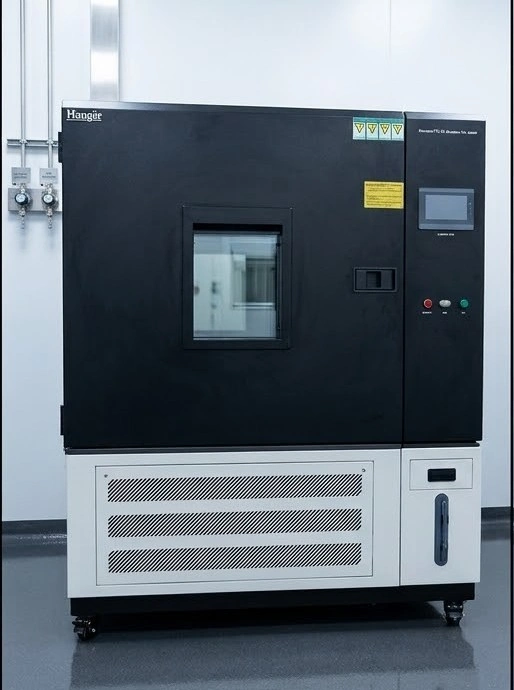
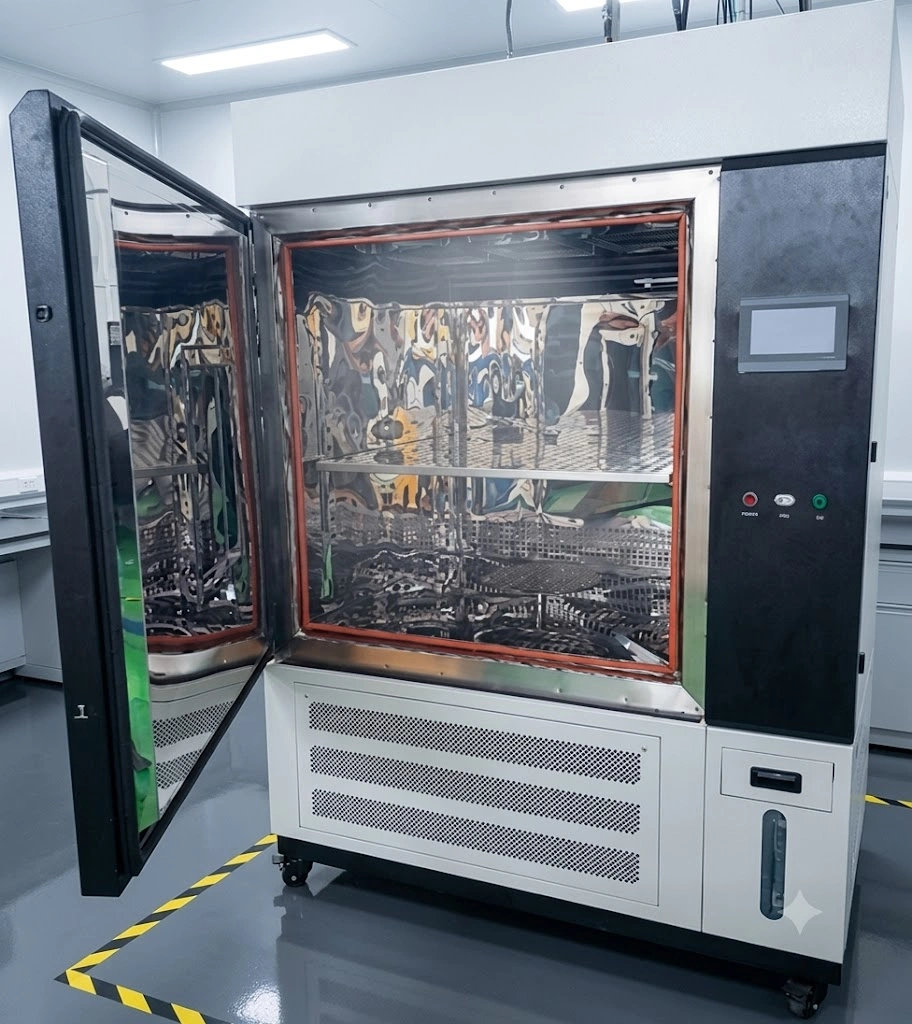
Specifications
| Solar Radiation Chamber | |
|---|---|
| Chamber workspace | 1000 × 1000 × 1000 mm |
| Temperature range | Up to 80°C |
| Irradiance level | Up to 1090 W/m² |
| Standards covered |
ISO 4892-2 IEC 60068-2-5 ASTM G155 MIL-STD-810 |
Objective of Solar Radiation Testing
The primary objective of Solar Radiation Testing is to evaluate both the thermal and photochemical effects of prolonged sunlight exposure on products and materials. The test helps determine the extent to which solar heating influences product performance, dimensional stability, and operational reliability while also assessing UV-induced degradation mechanisms such as discoloration, cracking, embrittlement, surface deterioration, and reduction in mechanical or electrical properties. The testing process typically includes evaluation of temperature effects through simulated day-night thermal cycling as well as long-term actinic effects resulting from continuous UV exposure. These assessments enable manufacturers to identify potential design weaknesses and ensure product suitability for deployment in sun-exposed environments.
SKC Group of Labs Expertise in Solar Radiation Testing
At SKC Group of Labs, Solar Radiation Testing is performed using advanced environmental simulation infrastructure designed to replicate real-world solar exposure conditions with high accuracy and repeatability. Our NABL-accredited laboratory provides comprehensive testing solutions aligned with internationally recognized standards, including ISO 4892-2 IEC 60068-2-5; ASTM G155; MIL-STD-810. Equipped with state-of-the-art environmental chambers and supported by a team of experienced test engineers, SKC delivers precise control of radiation intensity, temperature, humidity, and exposure duration to evaluate both thermal and UV-induced effects on products. Our expertise spans automotive, electric vehicle, aerospace, defense, industrial, and electronics sectors, helping customers validate product durability, identify design vulnerabilities, and enhance long-term reliability before field deployment. Through detailed test reporting and technical support, SKC enables organizations to transform environmental qualification testing into a valuable product development and performance optimization tool.
Key Benefits of Solar Radiation Testing
- Evaluates product performance under prolonged sunlight exposure.
- Assesses thermal loading and temperature rise effects.
- Identifies UV-induced material degradation and aging.
- Validates product reliability for outdoor deployment.
- Supports compliance with ISO 4892-2; IEC 60068-2-5; ASTM G155; MIL-STD-810requirements.
- Improves product durability, safety, and service life.
- Reduces field failures and warranty-related risks.