
Thermal Shock Test
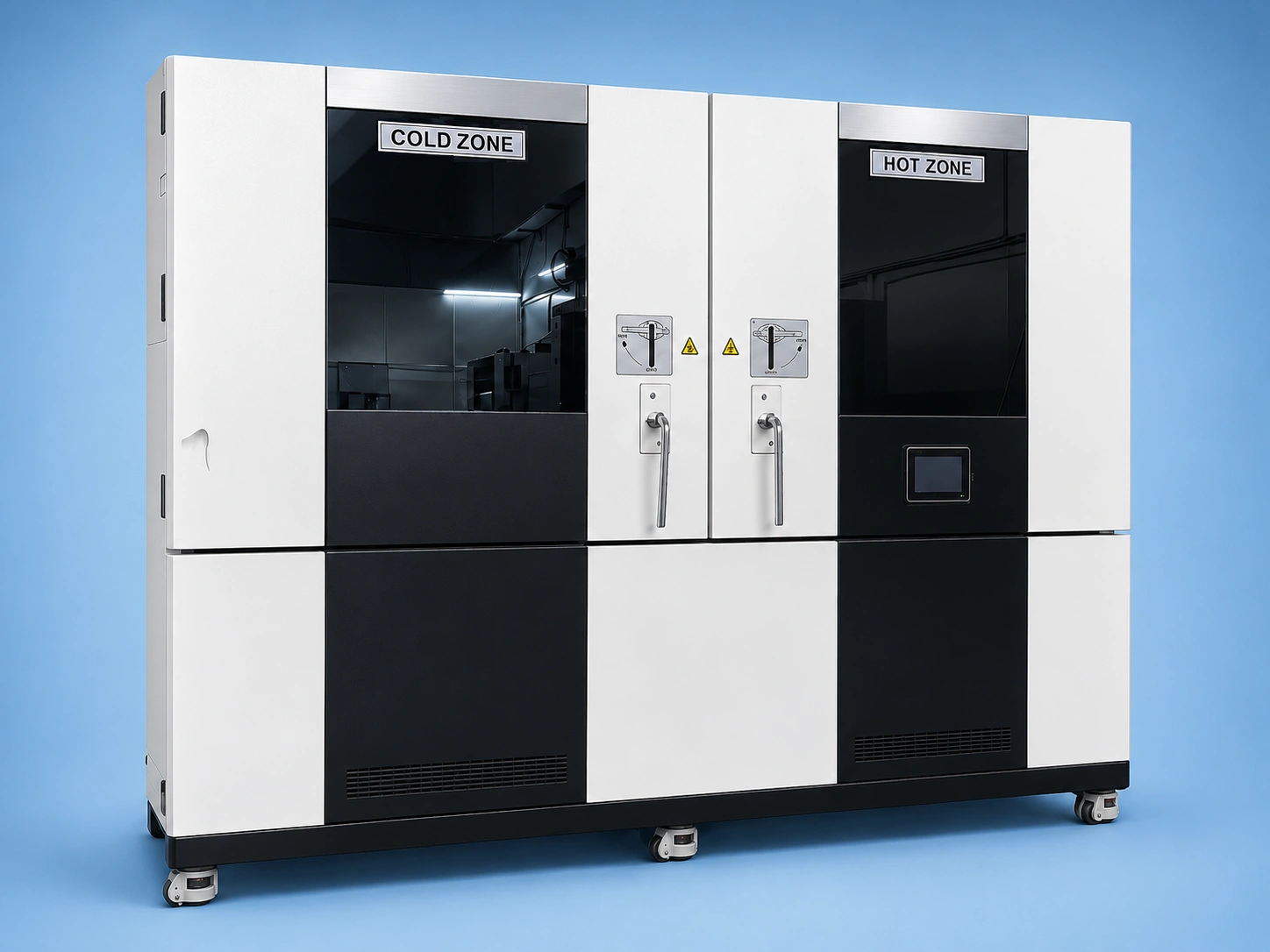
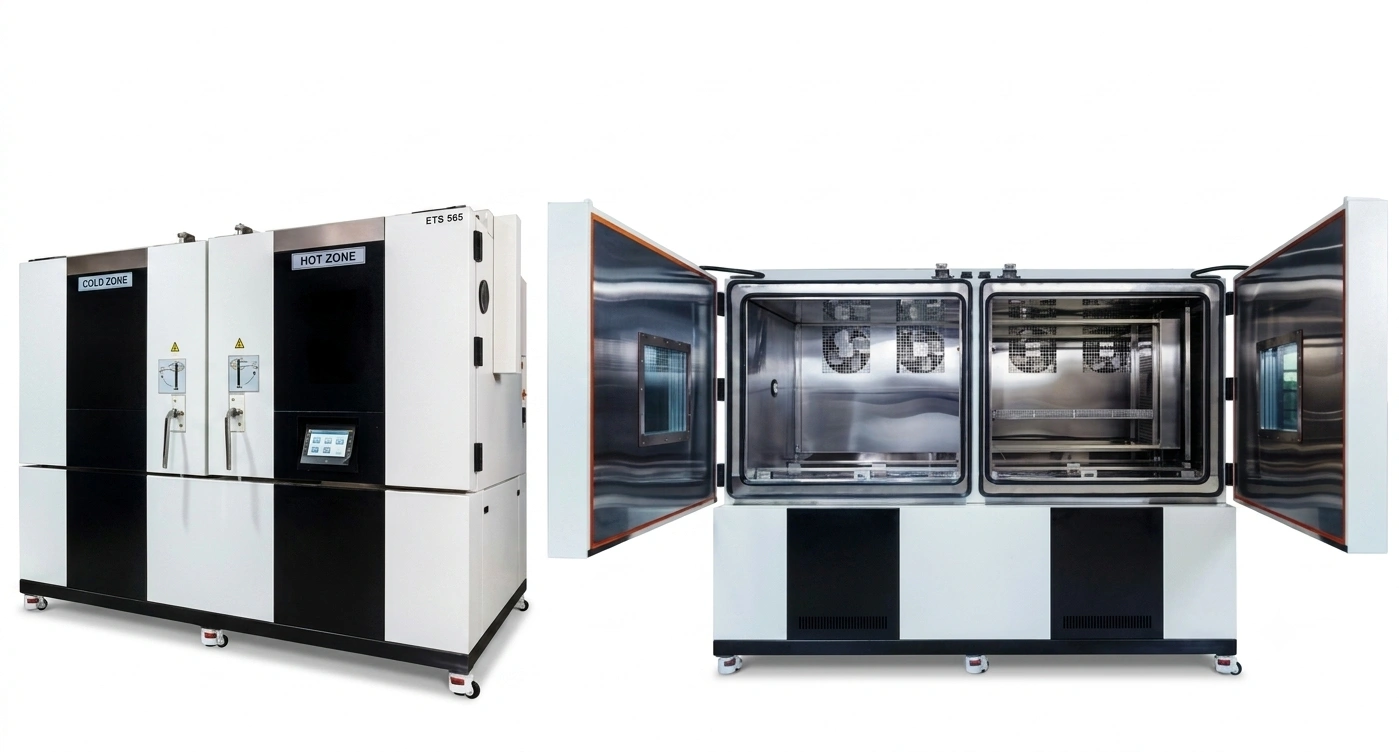
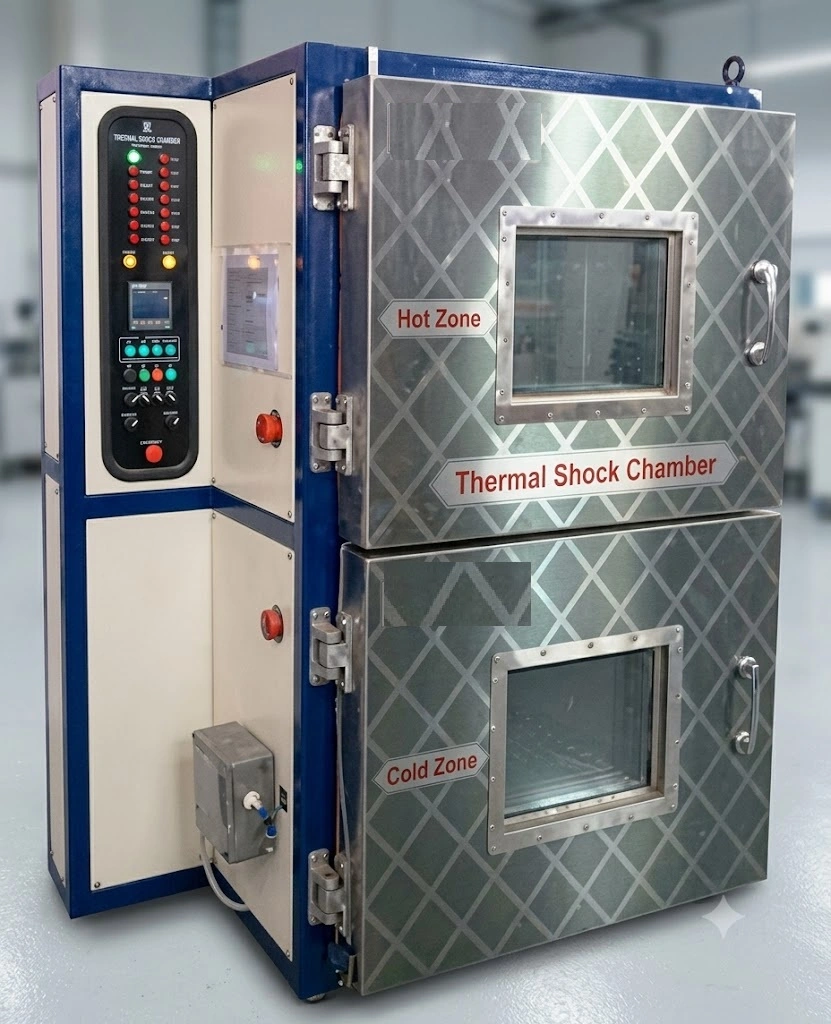
Specifications
| Thermal Shock Chamber | |
|---|---|
| Total no. of chambers | 3 nos |
| Chamber dimension | 1000 x 750 x 750 mm |
| Temperature range | -70°C to 210°C |
| Transfer duration | within 10 seconds |
| Basket movement | Horizontal or Vertical |
| Basket load carrying capacity | 90kg |
| Standard covered |
MIL-STD-810, JSS 55555, IEC 60068 series, ISO 20653, EIA 364 series, EN 2591 series |
Case Studies
Introduction
Thermal Shock Testing is a critical environmental reliability test used to evaluate a product’s ability to withstand rapid and extreme temperature transitions. Components used in automotive, aerospace, defense, and industrial applications are often exposed to sudden changes in ambient temperature during operation and storage. This test helps identify potential weaknesses caused by differential thermal expansion and contraction of materials, ensuring long-term durability and performance under harsh environmental conditions.
Thermal shock
Objective
The objective of this Thermal Shock Test was to assess the durability and structural integrity of the Instrument Cluster Display when subjected to repeated transitions between extreme high and low temperatures for a total duration of 150 hours, 100 cycles.
The purpose of the test was to verify that the product could withstand severe thermal stresses without exhibiting any physical damage or abnormalities.
Key Result
The Instrument Cluster Display successfully completed 100 thermal shock cycles between -40°C and +85°C over a test duration of 150 hours. Upon completion of the test, all samples were visually inspected and found to be free from external damage, cracks, deformation, or any other physical abnormalities. The test results demonstrate that the product maintained its physical integrity and exhibited excellent resistance to thermal stress under the specified environmental conditions.
Conclusion
The tested Instrument Cluster Display successfully passed the Thermal Shock Test requirements, confirming its capability to withstand repeated extreme temperature transitions and making it suitable for demanding automotive operating environments.