
Altitude Testing
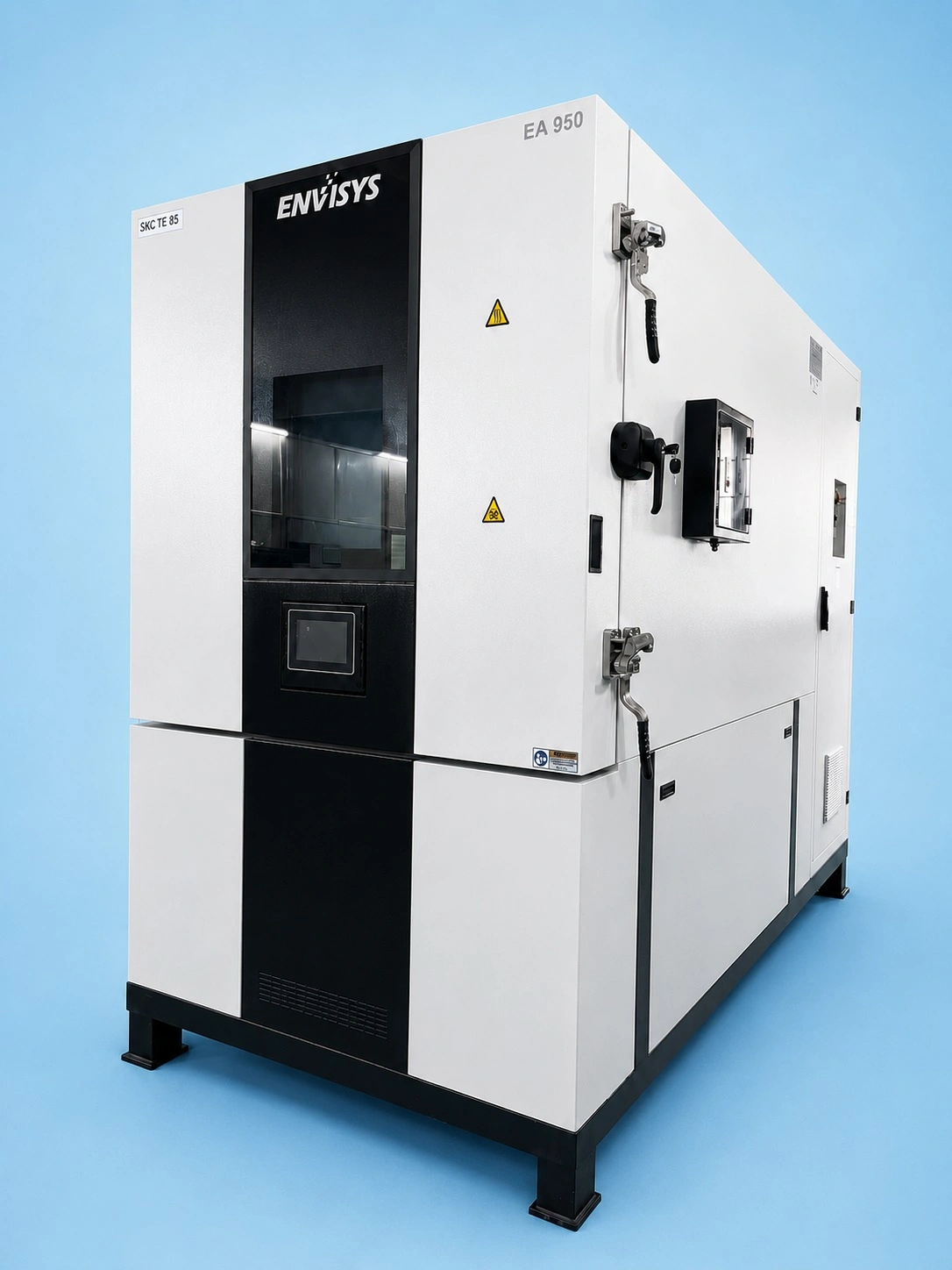
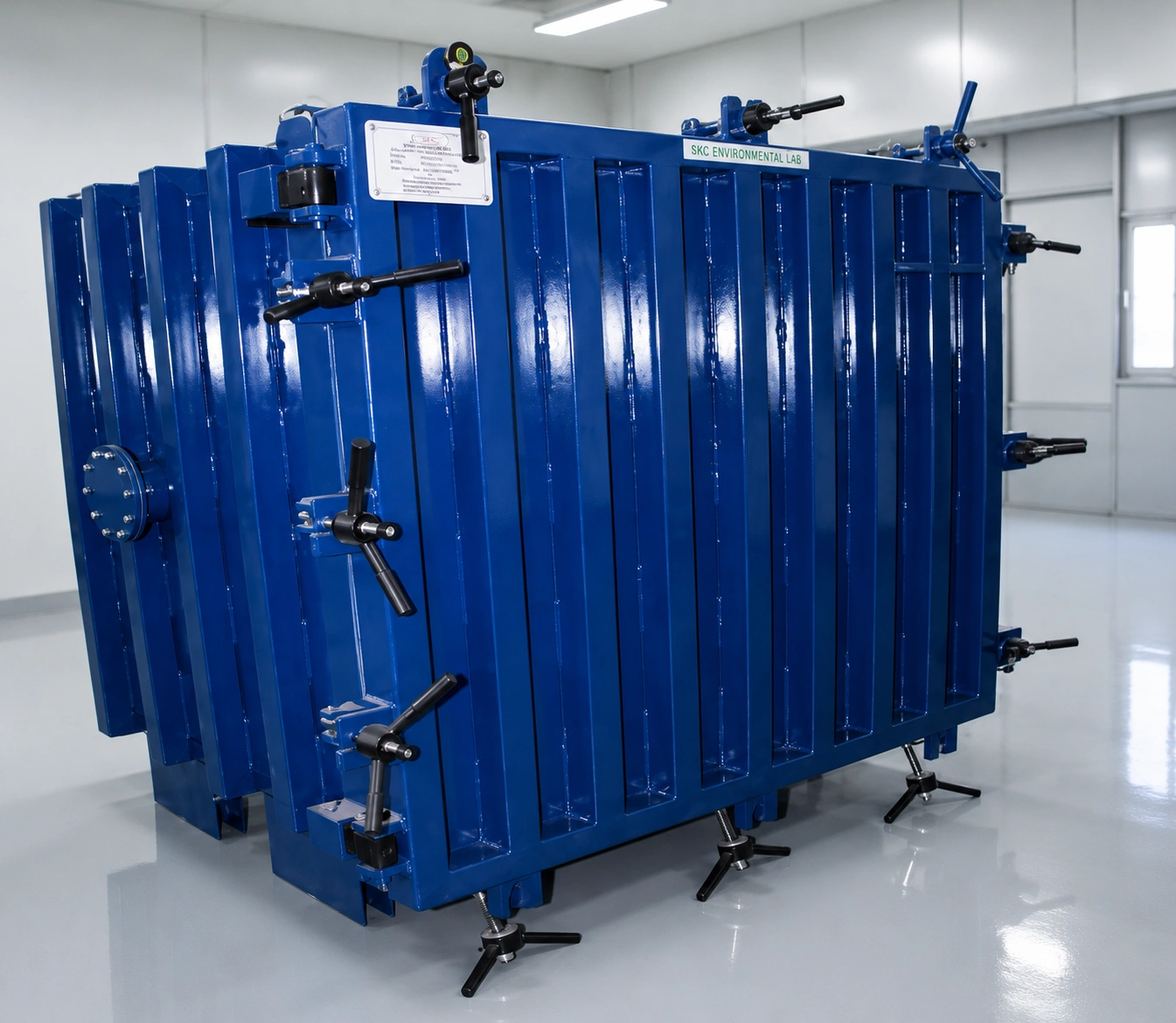
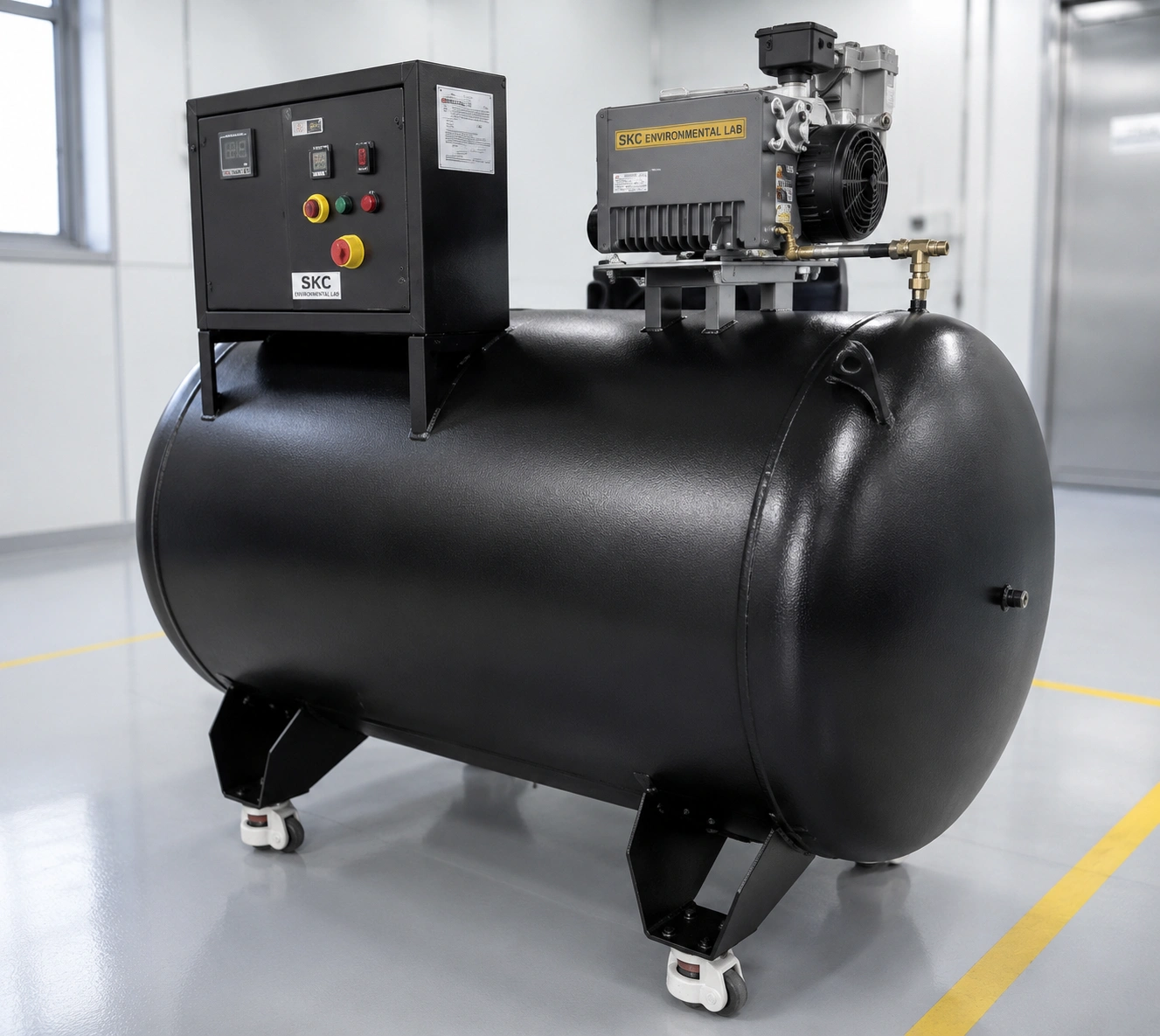
Specifications
| Altitude Chamber / CATH Chamber | |
|---|---|
| Total no. of chambers | 3 nos |
| Chamber dimension | 1000 x 1000 x 1000 mm |
| Low air pressure range | 1mBar to 2000mBar |
| Ramp rate range | Upto 2mBar/min |
| Temperature range | -70°C to 180°C |
| Humidity range | Upto 98%RH |
| Standard covered |
MIL-STD-810, JSS 55555, IEC 60068 series, ISO 20653, EIA 364 series, EN 2591 series |
Capability Highlights
- Simulation of high-altitude conditions with precise low air pressure (vacuum) control
- Integrated environmental testing capability combining temperature, humidity, and air pressure (CATH)
- Accurate control of pressure, temperature, and humidity parameters for realistic environmental simulation
- Wide operating range to replicate extreme altitude and climatic conditions
- Uniform chamber performance ensuring consistent and repeatable test results
- Programmable test profiles for cyclic and steady-state conditions as per international standards
- Capability to test from small components to fully assembled systems
- High reliability systems designed for long-duration and endurance testing
- 24×7 continuous operation for combined environmental stress testing
- Real-time monitoring and data logging with complete traceability
Why SKC for Altitude testing
- Low air pressure and combined environmental testing is designed to replicate real-world altitude and climatic conditions with accuracy, consistency, and zero compromise
- No compromise on critical parameters such as pressure levels, temperature range, humidity control, duration, and severity
- Uniform chamber performance ensuring stable pressure, temperature, and humidity distribution throughout the test volume
- Calibration through reputed and accredited organizations, supported by a strong internal calibration system to ensure accuracy across all sensors (pressure, temperature, humidity)
- State-of-the-art chambers maintained under AMC with continuous upkeep for reliable and consistent performance
- Capability to handle diverse test requirements — from individual components to large systems under combined environmental conditions
- Customized CATH profiles aligned with actual field, altitude, and application-specific requirements
- Continuous 24×7 testing capability supporting long-duration and cyclic environmental tests
Case Studies
Introduction
The Altitude Test is conducted to evaluate the ability of a product to operate reliably under low atmospheric pressure conditions that are typically encountered at high altitudes. For aerospace and unmanned aerial vehicle (UAV) applications, altitude testing is critical to verify the structural integrity, operational performance, and environmental durability of the equipment when exposed to reduced air pressure and extreme temperature conditions. The test helps identify potential issues related to material behaviour, electronic performance, and overall functionality before deployment in real-world operating environments.
Altitude Testing
Objective
The Altitude Test was performed on the Drone (Unmanned Aerial Vehicle) as per customer requirements with reference to JSS 55555:2020, Revision 4, Test No. 3. The objective of the test was to assess the UAV’s capability to withstand simulated high-altitude environmental conditions at an altitude of 6,100 meters with an air pressure of 46.5 kPa (465 mbar). The evaluation included exposure to both low-temperature conditions (-55°C ±3°C) and high-temperature conditions (+55°C ±3°C) while monitoring the functional performance of the equipment. The test was intended to verify that the UAV remains operational and free from any physical degradation when subjected to extreme altitude-related environmental stresses.
Key Result
The Drone (UAV) successfully completed both altitude test cycles conducted under low-temperature and high-temperature high-altitude conditions. Following completion of the tests, the sample was visually inspected and found to have no external damage, deformation, or physical abnormalities. Performance verification checks carried out by the customer before, during, and after the test confirmed that the UAV maintained its intended functionality throughout the exposure period. The successful completion of the altitude testing demonstrates the UAV’s capability to operate reliably under simulated high-altitude environments without any adverse impact on its structural or functional performance.