
Ice Water Splash Test / Cold Water Spray Test
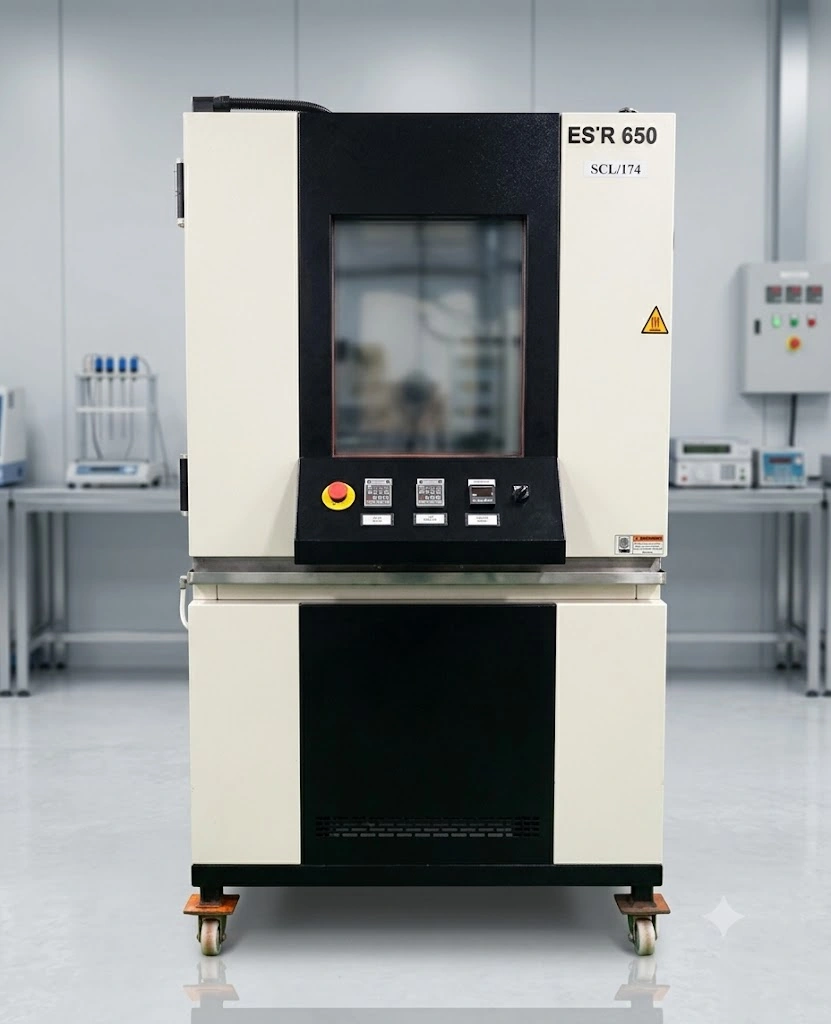
Specifications
| Ice Water Splash Test Chamber | |
|---|---|
| Chamber workspace | 500 × 500 × 450 mm |
| Chamber temperature range | Ambient to +120°C |
| Water temperature range | 0°C to +5°C |
| Spray fluid | Arizona dust with water, Salt solution, DM water |
| Maximum sample weight | Up to 60 kg |
Why Ice Water Splash Testing is Required
Products operating in elevated temperature conditions can undergo significant thermal stress when suddenly exposed to cold water. In automotive applications, for example, hot components may encounter icy water, slush, or cold road spray during winter driving conditions.
Ice Water Splash Testing helps manufacturers:
- Verify product durability under rapid temperature transitions.
- Identify potential cracking, deformation, seal failures, or material degradation.
- Evaluate the reliability of electrical and electronic assemblies exposed to thermal shock.
- Ensure continued performance and safety under real-world environmental conditions.
- Validate product compliance with automotive and industry-specific reliability requirements.
By reproducing these harsh operating conditions in a controlled laboratory environment, manufacturers can detect design weaknesses early and improve overall product robustness.
Standards Supported
SKC Group of Labs supports Ice Water Splash / Cold Water Spray Testing in accordance with:
- ISO 16750-4 – Road Vehicles – Environmental Conditions and Testing for Electrical and Electronic Equipment
- Clause 5.4.2 – Splash Water / Thermal Shock Test
Applications
Ice Water Splash Testing is commonly performed on:
- Automotive electronic control units (ECUs)
- Battery packs and battery management systems
- Sensors and actuators
- Lighting systems
- Connectors and wiring assemblies
- Power electronics
- Under-hood components
- Vehicle exterior instruments and assemblies
Key Benefits
- Improved product reliability and durability
- Early detection of thermal stress-related failures
- Reduced field failures and warranty claims
- Enhanced safety and operational performance
- Compliance with global automotive qualification requirements
This test is an essential part of environmental validation programs for automotive and transportation products exposed to harsh weather and rapidly changing temperature conditions.